By Kudzu the Cat, Feline Expert in Boxes, Humans, and Feline Affairs. Official Spokesperson for Cats Everywhere
I have never understood why humans enjoy moving.
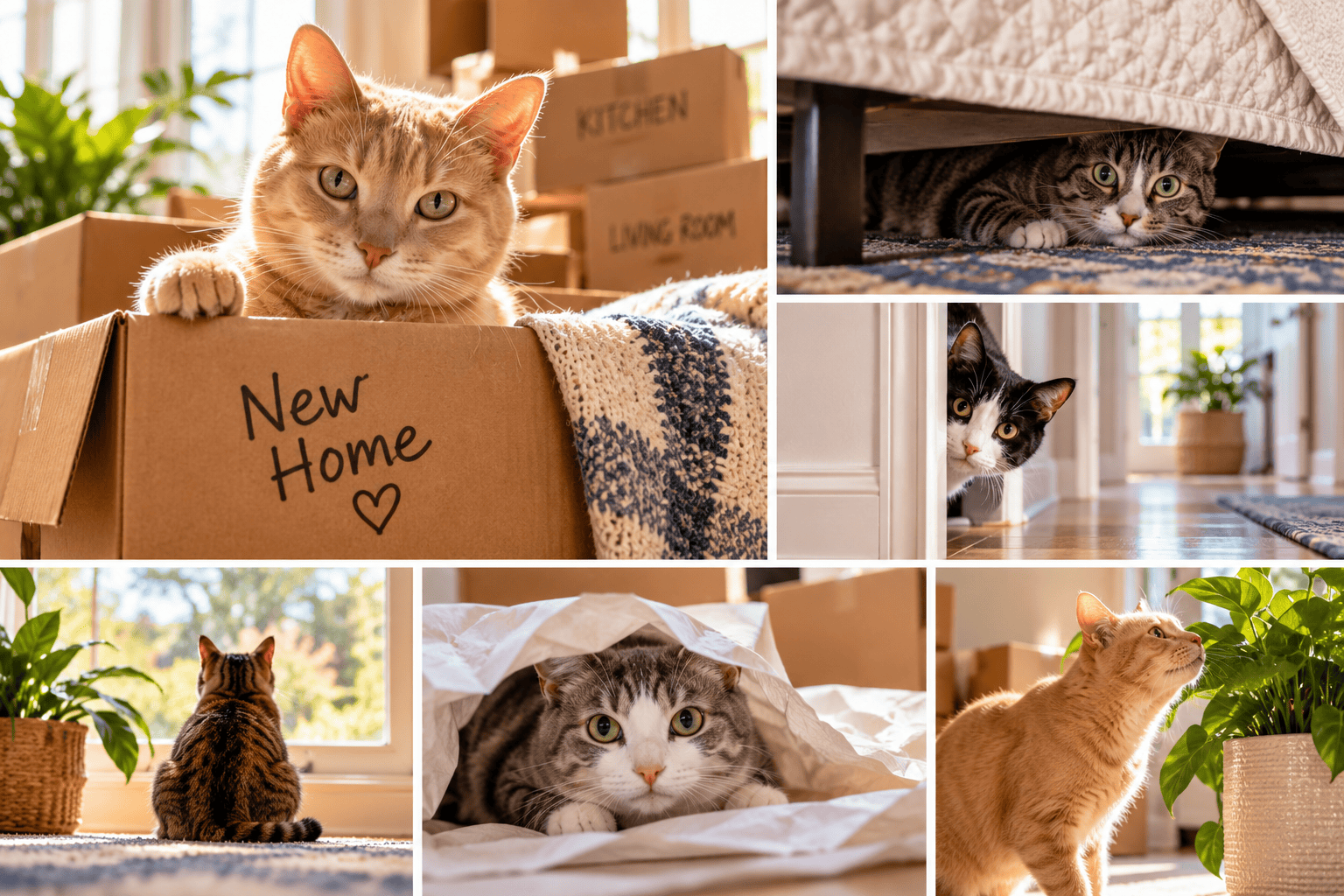
You spend weeks putting everything you own into boxes. Then you carry those boxes somewhere else and spend several more weeks taking everything back out.
Cats have a much more efficient system.
We sit in the boxes.
But occasionally, despite our objections, we are moved too.
One morning we wake up in our perfectly acceptable home. By evening, we are standing in a strange place filled with unfamiliar smells and mysterious noises, and we never even got a vote.
So we hide.
And then you panic.
Hiding Is Not Necessarily a Bad Thing
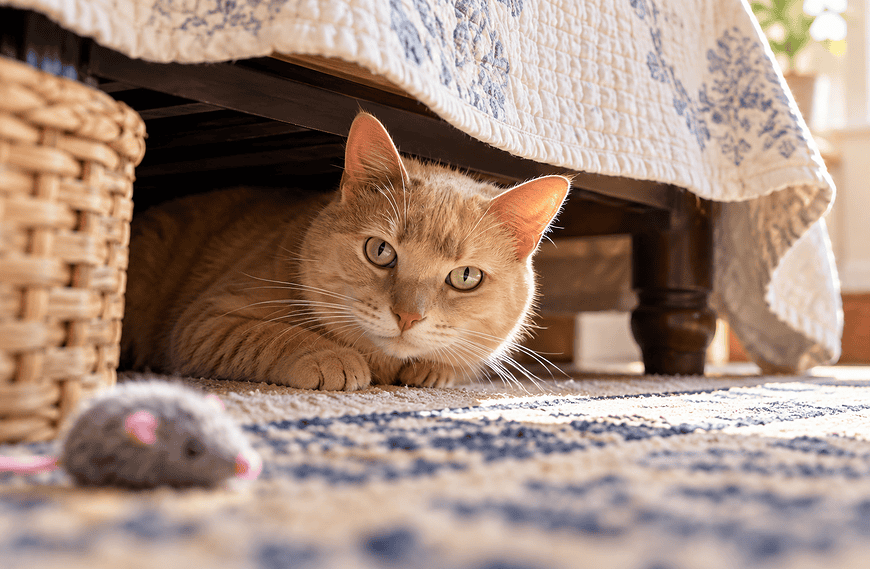
When we arrive in a new home, hiding can be a normal response to stress.
We feel safer when we have somewhere to retreat. In fact, feline veterinary guidelines recommend that cats have access to safe hiding places where we can feel protected.
So if we disappear under the bed shortly after moving, resist the urge to crawl under there and pull us out.
We know where you are.
Trust me.
Instead, give us a quiet room to decompress.
Put familiar things in the room. Our bed. Our carrier. A favorite blanket. A scratching post. Even the cardboard box you were planning to recycle.
Especially the cardboard box.
Familiar smells can be reassuring when everything else around us suddenly looks, sounds, and smells different. Veterinary feline environmental guidelines recommend introducing unfamiliar experiences gradually whenever possible.
Set Up a Safe Space for Your Cat
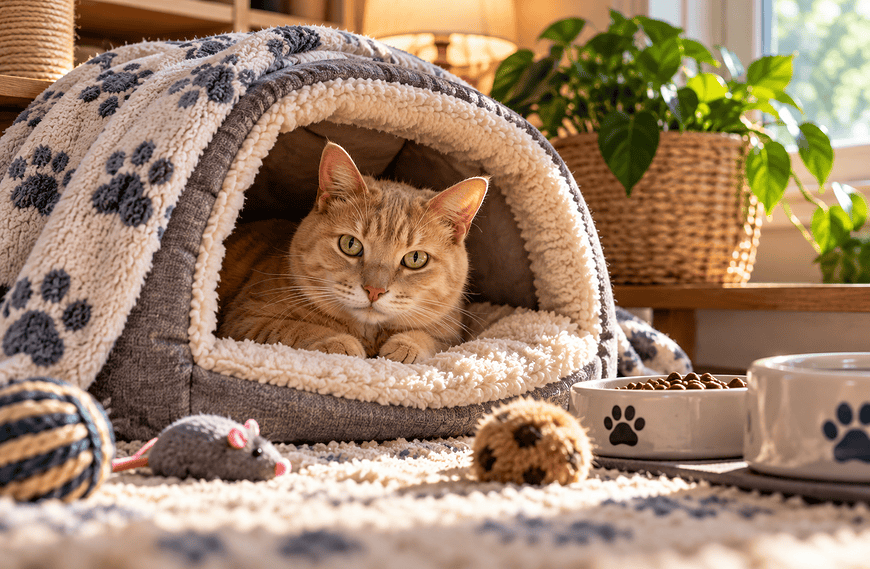
Our temporary room should have the important things nearby.
Food. Water. A litter box. Comfortable resting places. Somewhere to hide.
But please don’t pile everything together in one corner.
As cats, we prefer important resources to be separated. Don’t cram food and water against our litter box. You don’t eat in the bathroom for a reason.
Research into feline environmental needs supports providing separate locations for important resources such as food, water, litter boxes, resting areas, scratching areas, and places to play. Giving us choices and some separation between these resources can help us feel more secure in our environment.
I agree with this research.
Personally, I have never understood why humans require scientific literature to establish that one should not dine beside the toilet.
Let Cats Decide When to Explore
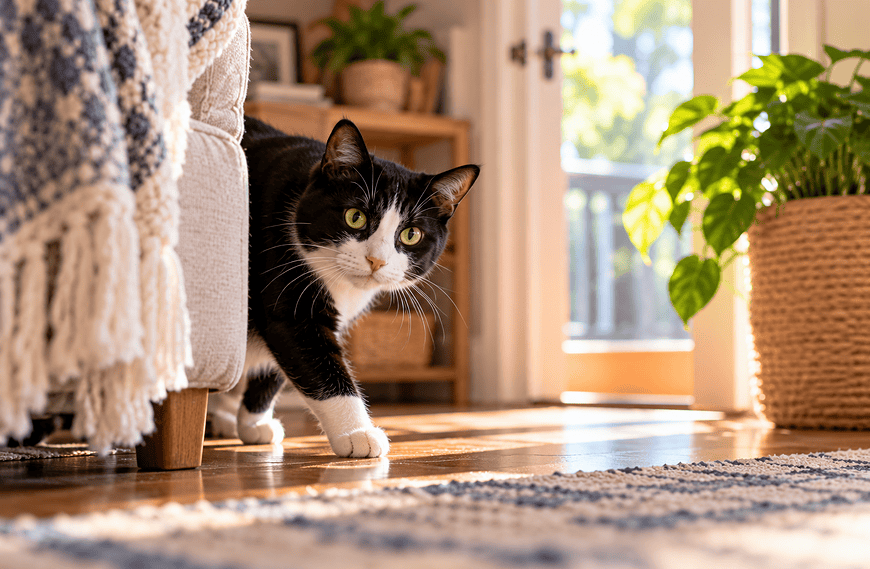
Once we seem comfortable in our safe room, let us investigate more of the house at our own pace.
Please do not carry us into the living room for the official grand tour.
We are cats.
We conduct our own inspections.
Some of us may venture out fairly quickly. Others need much longer. The important thing is that we gradually start becoming more comfortable.
You may notice us coming out when the house is quiet. We may explore at night. We may sniff something, hear the refrigerator turn on, and immediately retreat under the bed to reconsider our life choices.
That still counts as progress.
What to Do If Your Cat Stops Eating
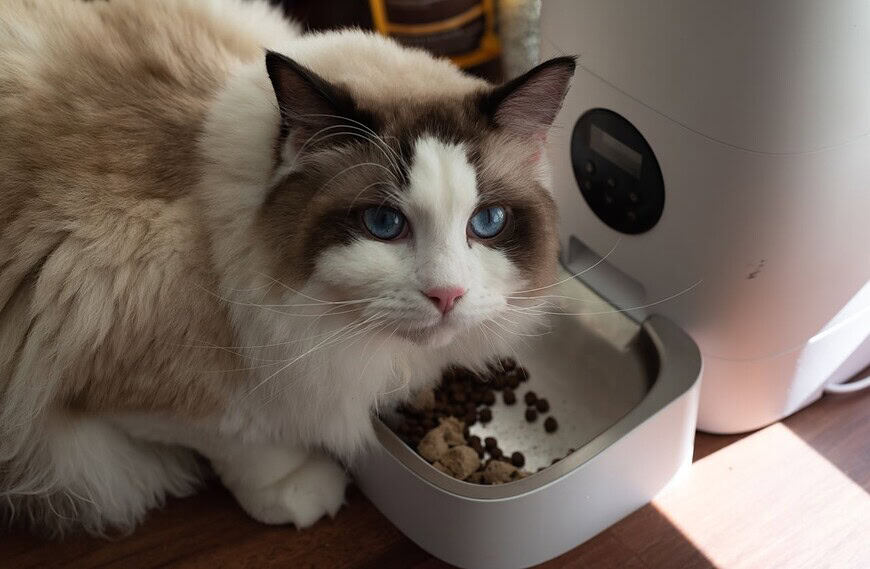
This is serious, so pay attention.
When we consume too few calories, we can develop a serious condition called hepatic lipidosis, also known as fatty liver disease. Stressful events, including moving to a new home, can cause us to lose our appetite.
So while eating a little less after a move may be related to stress, please don’t assume your cat who is barely eating is simply being dramatic.
If we are reluctant to eat, try offering a favorite canned food. You can add a little warm water or warm the food for just a few seconds to enhance the smell and make it more appealing. Stir it well, and make sure it is not too hot before serving.
A favorite treat may help too.
This is not bribery.
It is an apology.
More importantly, pay attention to how much we are actually eating. If we stop eating or are eating very little, contact your veterinarian. Do not let several days pass because you assume we will eventually get hungry enough to eat.
Your veterinarian may want to examine us to make sure stress is really the reason for the appetite change.
When You Should Worry About a Hiding Cat
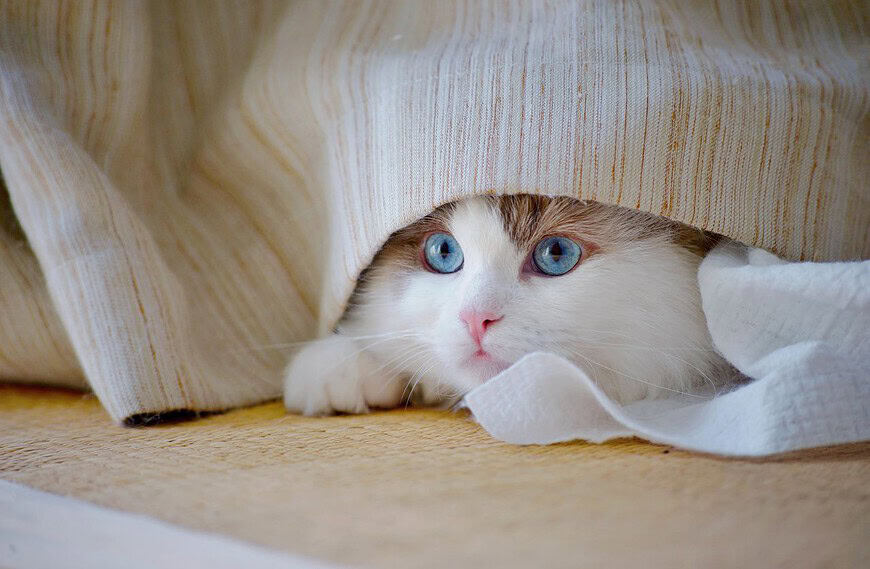
Hiding by itself after a move can be understandable.
Hiding along with other changes deserves more attention.
Watch whether your cat is eating, drinking, urinating, and using the litter box normally. Notice how they behave when they do come out.
Vomiting, diarrhea, weakness, lethargy, difficulty urinating, a continued poor appetite, or other signs of illness mean you should contact your veterinarian.
When we’re stressed, we may not eat, hide, or change our litter box habits. But these can also be signs of medical problems.
You know us better than anyone. If something does not seem right, call your veterinarian.
What About Feline Pheromones?
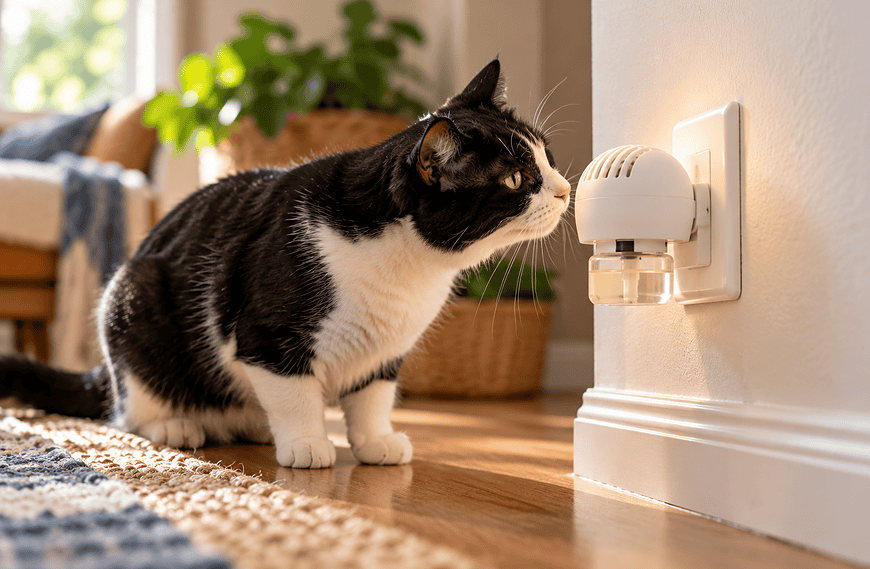
You can also ask your veterinarian about a feline pheromone diffuser, such as Feliway.
These products mimic feline chemical signals and are sometimes used as part of a plan to help us cope with stressful situations.
I consider this acceptable as long as nobody plugs in anything that smells like Fresh Linen Meadow Breeze.
The house should smell like me.
Obviously.
Most Cats Need Time to Adjust to a New Home
Moving is a big change for us.
You know why the sofa is suddenly in a different building. We do not.
From our perspective, our entire territory disappeared, and we were transported somewhere we have never seen before.
So unpack your boxes. Keep our routines as familiar as you can. Give us somewhere safe to hide. Keep an eye on our appetite and litter box habits.
Then give us a little space.
Eventually, you may hear footsteps in the hallway. A cautious face will appear around the corner. There will be sniffing. There will be inspecting. There may be some judgment about your furniture placement.
And one day, you will realize we are no longer hiding.
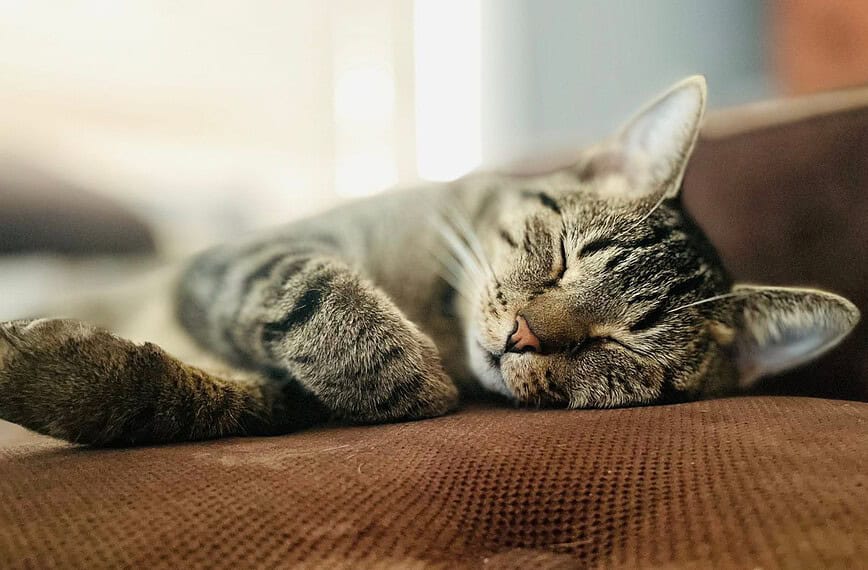
We’ll be sleeping in the middle of the sofa, as though we have owned the place our entire lives.
A house doesn’t really become home when the last box is unpacked.
It becomes home when we finally decide it belongs to all of us.
Love,
Kudzu 🐈⬛
Medical Disclaimer: Kudzu may be the Official Spokesperson for Cats Everywhere, but he is not a veterinarian. The information in this article is for educational purposes only and is not a substitute for veterinary advice, diagnosis, or treatment. If you are worried about your cat, please contact your veterinarian. Kudzu recommends this even if your cat strongly objects to the carrier.